

Dealing with the end of a relationship

Image: Yuvraj Singh
Are poly breakups easier because you have more partners?
This is actually a question I’ve been asked. For real. It’s a bit heartless—would you ask the parents of three kids if it’s easier to have a child die than it is for parents with only one kid?—but I can kinda see where it comes from. After all, if you have three romantic partners, that means you aren’t really committed to them, right? So if you lose one, NBD, right?
You know, just like you can’t commit to your children if you have three of them...oh, wait. Somehow, we know that isn’t true of children, but a lot of folks still think it must be true of lovers, because reasons.
Anyway, no. The answer is no.
The thing I’ve learned from my relationships...well, one of the things I’ve learned from my relationships, or at least from my breakups, is that there is no such thing as “how to handle breakups.” Every breakup is as unique as a fingerprint. No one-size-fits-all approach to breakup works, or can work.
On top of that, you can’t necessarily tell in advance how a breakup will go. A person who seems reasonable, mature, and emotionally solid can lash out, or even become abusive (or violent!) during a breakup. This has happened to me. On the other hand, some breakups are like “Oh. Yeah, we are better as friends, aren’t we?”
I’ve had an ex who became a “snogging friend,” someone who made out with me from time to time, after we broke up. We both realized that we were awesome as friends and had great fun as lovers, but weren’t really aligned well as romantic partners. It happens.
Now, I do actually get it. Objectifying issues of “it must be easier because polyamory means you can’t commit” aside, some folks say polyamorous people must have it easier after a breakup than monogamous people do, because after all, you’re not alone, right?
Sometimes it’s better to be alone
One of the hardest, and most important, lessons we can learn on this trip through life is that being alone is preferable to being in a bad relationship. Whether polyamorous or monogamous, being able to be complete in yourself when you’re alone makes a breakup much easier.
People aren’t interchangeable commodities. Losing someone you love hurts. Even when you’re surrounded by love.
Now, that said, yeah, being surrounded by love might sometimes make a painful breakup a bit easier. It’s not because you have more partners, though; a monogamous person going through a breakup will find it easier if they’re supported by friends and family.
It’s because joy shared is multiplied, and grief shared is lessened. Love and support make adversity more bearable. Yes, you’re still hurting, but you have people to talk to. You have people around you who can help distract you, who can make you lunch during those times when all you can manage to do is curl up beneath the covers and cry, and who can tell you that the night will pass and the dawn will come. Which it will, but even when you know that, sometimes it’s nice to hear.
So yes, a support network is always nice to have when the wheels come off, and going through a breakup (or the loss of a child, or any other heartbreak) is no exception.
Healthy relationships look the same, but every breakup is unique
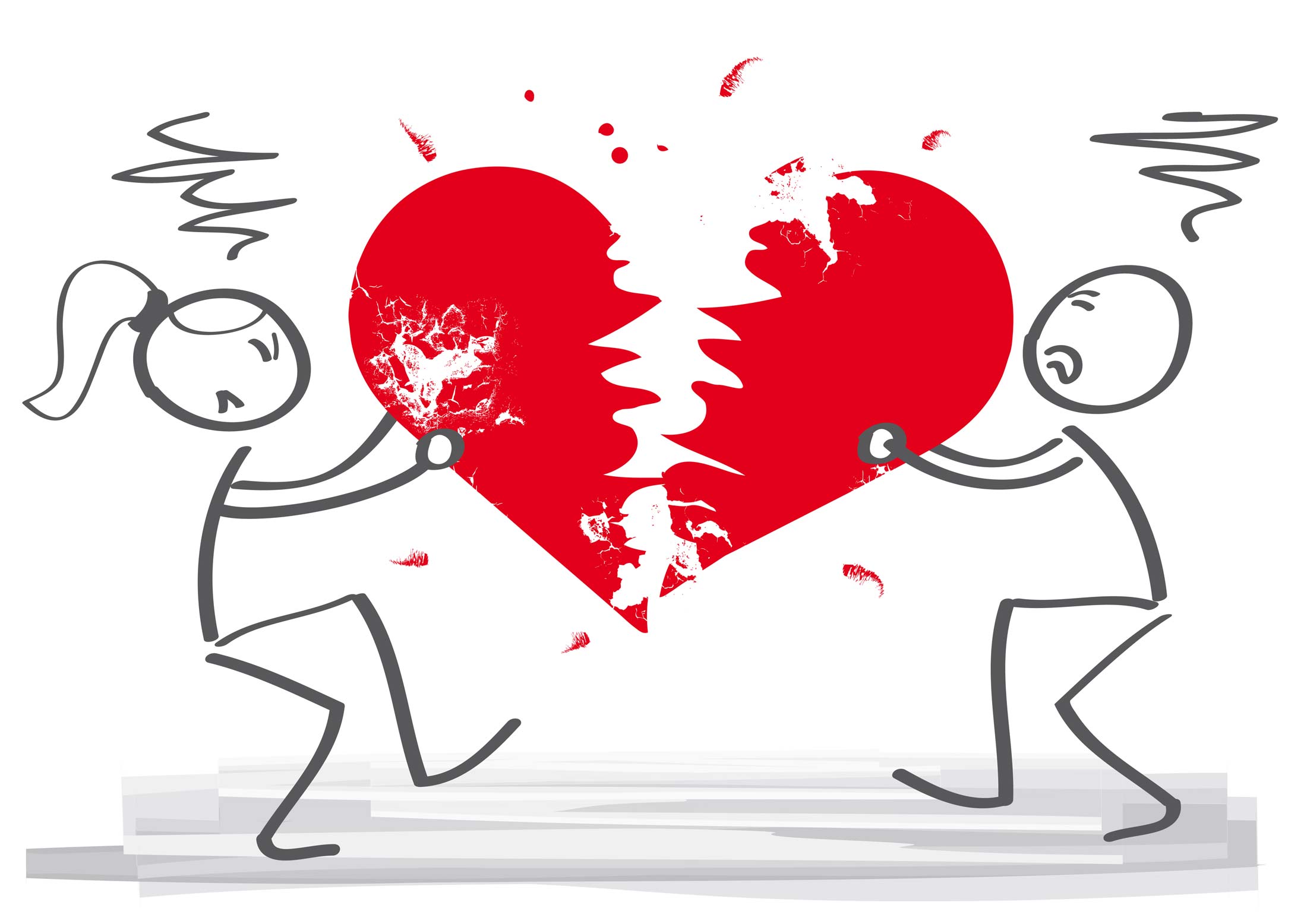
Image: trueffelpix
No two breakups are alike, which means no approach to handling breakups will ever fit every breakup. Still, there are some tools that help in most breakups. These aren’t poly-person tools; they’re tools for everyone, no matter what your relationships look like. They’re things like not holding on to bitterness, not externalizing blame, leaning on friends and family, and remembering that the dawn will come. They’re things like being honest with yourself about the ways you contributed to the breakup, so you can avoid doing that in the future. They’re things like allowing yourself to feel what you feel, without trying to suppress your feelings but also without hanging on to them. They’re things like investing your time and energy into doing things you love, especially when you find yourself getting sucked back into the pit. If all else fails, go for a walk. (Walks help. I’m serious.)
And, of course, they’re things like not stalking your ex on social media and driving yourself batty because they don’t seem to be suffering as much as you are.
These apply to all breakups. Poly breakups aren’t special or unique. They’re breakups. When you’re polyamorous, your heart breaks just like anyone else’s.
But all this assumes a normal breakup between reasonably healthy people who once genuinely loved each other. Sometimes, that’s not the case.
Breaking up with abusers
Remember how I just said all healthy relationships look similar? When abuse enters the picture, things change.
Abusive relationships can be very difficult to get over on your own, because abuse creates “trauma bonding”—a subversion of the normal human attachment process where an abuser creates a dangerous situation that facilitates particularly intense attachment, then holds out himself or herself as an attachment figure.
I am not usually a fan of the conventional “wisdom” of cutting off all contact with an ex. I think that if you have a breakup with someone who’s reasonably emotionally mature, it’s often not necessary, and can in fact escalate drama, to cut off all contact with that person.
But that is absolutely, positively not the case with abuse. With abusive relationships, cutting off contact is absolutely reasonable, even necessary. So is talking to a qualified therapist or counselor with experience in abuse—getting over an abusive relationship is not something most folks can do on their own, and there’s no shame in getting help from a qualified professional.
That’s not a poly thing, that’s a relationship thing. The only difference is that with poly relationships, the mechanism for abuse can be different (though that’s a whole topic of its own).

There’s one more element that’s vital to preserve your sanity in any breakup, but especially in an abusive breakup:

Image: trueffelpix
Hope.
Nihilism is easy. Nihilism is the Dark Side of the Force: a fast, seductive path to despair. “This relationship didn’t work, now I will be alone forever.” “I didn’t spot how I was being abused, even though it’s obvious in hindsight. How could I have been so stupid?” “I am unworthy of a happy relationship.”
Those thoughts can call to you as you lie in bed sleepless in the middle of the night, telling you what has been will always be, that there will never be a time you walk in the sun again, your heart whole and your step happy. Don’t believe them.
Even the darkest tunnel has a light at the end. We are all born of frailty and error. Gentleness with yourself is the beginning of all compassion. We all collect dents and scratches on this trip through life. It happens, even when we mean well, and others will occasionally leave dents on your heart even when they mean well. You will inevitably collect a certain amount of scuffs and scratches on your journey. Love isn’t for cowards.
But that is not all there is. Breakups don’t mean you’re unworthy, only that you’re human. Learn what lessons you can, and carry them forward in your life, resolving if you have done poorly to do better, and if the boundaries around yourself were sinned against1 to learn to recognize the signs in the future. Seek to make every relationship better than the last, to learn from your experiences and to go forward a better person for them.
If you are hurt, remember that nihilism cannot promise to keep you safe from hurt in the future, only to make sure the hurt endures forever.
[1]
“And that’s what your holy men discuss, is it?”
“Not usually. There is a very interesting debate raging at the moment on the nature of sin. for example.”
“And what do they think? Against it, are they?”
“It’s not as simple as that. It’s not a black and white issue. There are so many shades of gray.”
“Nope.”
“Pardon?”
“There’s no grays, only white that’s got grubby. I’m surprised you don’t know that. And sin, young man, is when you treat people like things. Including yourself. That’s what sin is.”
“It’s a lot more complicated than that—”
“No. It ain’t. When people say things are a lot more complicated than that, they means they’re getting worried that they won’t like the truth. People as things, that’s where it starts.”
“Oh, I’m sure there are worse crimes—”
“But they starts with thinking about people as things.”
—Terry Pratchett, Carpe Jugulum
You can find a deeper dive into this page in the Spotlight On... series on the More Than Two blog here.